
After months of Oklahoma summer heat, September brings something Norman homeowners genuinely look forward to: cooler mornings, open windows, and a break from running the AC constantly. But that same shift means a furnace that hasn’t fired up since late winter is about to be called back into service. Whether it’s ready is worth finding out now. Not during the first overnight cold snap.
We’ve been helping Norman homeowners prepare for heating season since 2002, and with more than 10,000 customers served across the area, we’ve seen firsthand what September maintenance prevents. A few straightforward checks on your end, combined with a professional tune-up before the seasonal rush, is the most reliable way to start the heating season with confidence.
Why September Is Norman’s Best Window for Furnace Maintenance
Oklahoma winters have a way of arriving on short notice. According to NOAA’s 1991–2020 climate normals for Norman, frost risk starts climbing around October 21, reaches a 50 percent chance of first freeze by November 3, and hits 80 percent by November 12. That’s a narrower runway than most homeowners realize, and it doesn’t account for the cold fronts that roll through before the official first freeze.
September is the sweet spot because the urgency hasn’t kicked in yet. Once temperatures drop and homeowners across Norman start noticing their furnaces aren’t keeping up, HVAC schedules fill fast. Booking now means shorter wait times, more scheduling flexibility, and no scrambling on a cold Tuesday evening when you actually need heat. A furnace that sat idle from April through August deserves a proper test run before you’re depending on it overnight.
Homeowner Checklist: What You Can Check Yourself
You don’t need a technician for every part of furnace preparation. These three steps are straightforward, take less than 30 minutes combined, and give you a useful baseline before a professional inspection.
- Check and replace the air filter. Standard 1-inch filters typically need changing every one to three months, depending on filter type and household factors like pets or dusty conditions. A clogged filter restricts airflow, makes the blower motor work harder, and reduces heating efficiency. Hold it up to a light source: if you can’t see light through it, replace it before the season starts.
- Clear the area around the furnace. Storage items, boxes, and seasonal gear tend to migrate near the furnace over summer. Clear at least a two-foot perimeter to maintain safe access and unrestricted airflow into the unit.
- Test the thermostat in heat mode. Switch your thermostat to heat, set it a few degrees above the current room temperature, and let the furnace run for several minutes. You’re confirming it fires up without hesitation, pushes warm air through the vents, and doesn’t produce unusual banging, rattling, or burning smells. A brief burning dust smell on the first run is normal. Anything persistent is worth noting for your technician.
What a Professional Furnace Tune-Up Covers
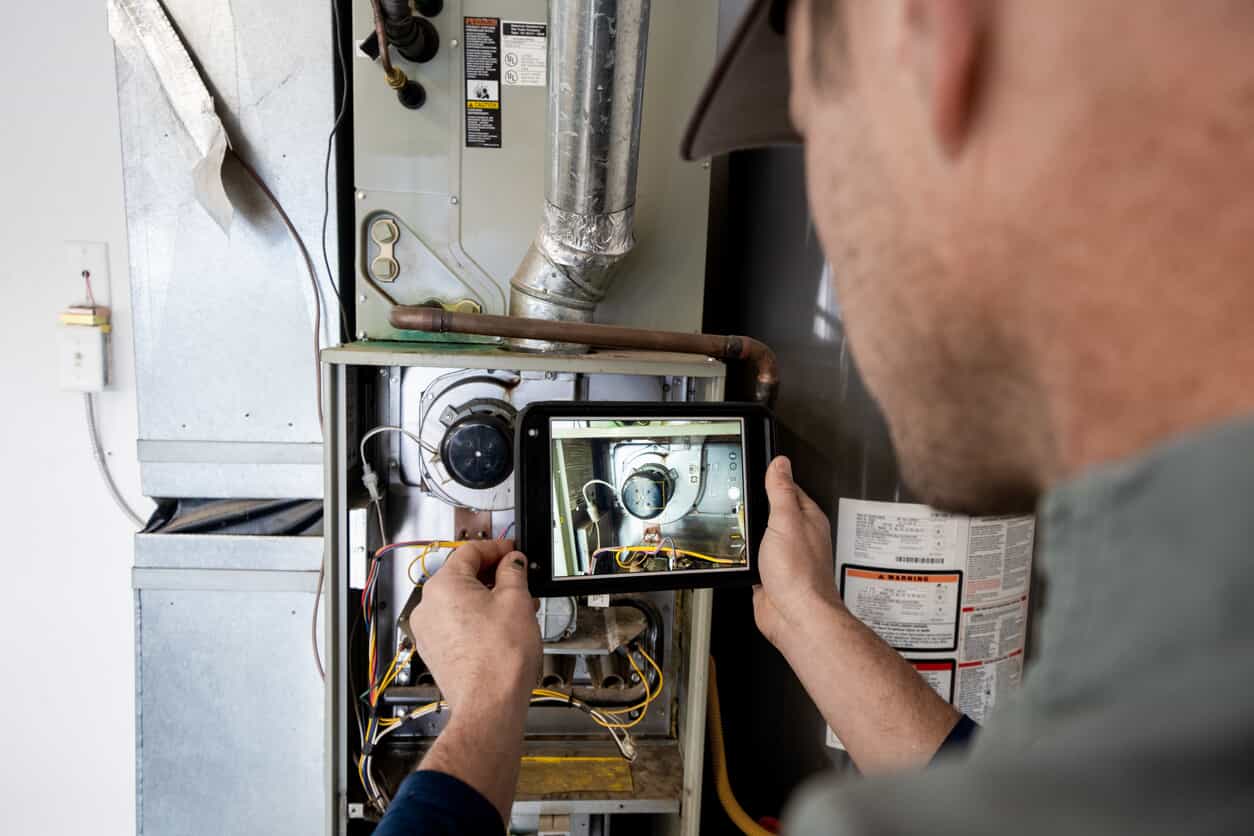
A homeowner checklist handles the basics, but a professional tune-up goes considerably deeper. Our NATE-certified technicians work through the furnace’s electrical, gas, and mechanical systems in a sequence designed to catch safety risks and efficiency losses that aren’t visible from the outside.
Safety Inspection Components
The heat exchanger is one of the most critical components a technician inspects. Cracks there can allow carbon monoxide to mix into your home’s air supply without any visible sign of a problem, which is why visual inspection alone isn’t enough. Our technicians also test the ignition system, clean the flame sensor (the component that confirms a flame is present and shuts the furnace down if it isn’t), and examine the gas burner assembly for correct combustion. We also check carbon monoxide detector placement and confirm the unit is operating within safe parameters.
Performance & Efficiency Checks
Beyond safety, a full tune-up includes thermostat calibration to verify the system is reading and responding to temperatures accurately, blower motor inspection to confirm it’s moving air efficiently, and a ductwork inspection to identify leaks or restrictions that waste heated air before it reaches living spaces. Together, these checks give you a clear picture of how the system is actually performing. Not just whether it runs.
Our residential diagnostic fee is $99, and that fee applies toward the cost of any repair performed during the same visit. Commercial properties carry a $130 diagnostic fee. There are no hidden charges for identifying a problem.
Warning Signs Your Furnace Needs Attention Before Cold Weather
Some furnaces pass the basic thermostat test but are already showing signs of a developing issue. Watch for these between now and your scheduled maintenance appointment.
- Uneven heating across rooms. If some rooms warm up quickly while others stay cold at the same thermostat setting, the issue may be with airflow, ductwork, or the blower motor.
- Unexplained increases in energy bills. A furnace working harder than it should to maintain temperature can show up in your utility costs before it shows up as a breakdown.
- Persistent noise during operation. Occasional sounds during startup are normal. Banging, squealing, or rattling that continues through a full heating cycle points to something mechanical that won’t resolve on its own.
- A yellow or orange pilot light instead of blue. A yellow flame typically indicates incomplete combustion, often from a dirty burner, and warrants immediate attention.
Furnace age is also worth factoring in. Systems older than 15 years that are requiring repeat repairs are approaching the point where continued investment may not make sense. Standard furnaces typically operate around 80 percent AFUE (meaning 80 cents of every dollar spent on gas becomes heat), while high-efficiency models reach up to 98.5 percent AFUE. That gap compounds over an Oklahoma winter. Knowing where your system falls on that spectrum can help you weigh repair versus replacement before winter demand drives up both equipment prices and wait times.
Get Ready Before the Rush
Working through this checklist in September gives you options. You can schedule a professional tune-up before the seasonal rush, weigh repair-versus-replace decisions without pressure, and start the heating season knowing your system has been inspected and cleared. Waiting until November means competing with every other Norman homeowner who also put it off. Arthur's Air Conditioning, Heating, & Plumbing is here to help. Call us at (405) 302-8225 or schedule your tune-up online.